The Importance of High Quality in Products
In today’s competitive market, the quality of your product can make or break your business. High-quality products not only fulfill customer expectations but also enhance brand reputation, increase sales, and foster customer loyalty. This article explores the importance of maintaining high quality in products, the role of quality assurance, and how businesses can ensure their offerings meet the highest standards.
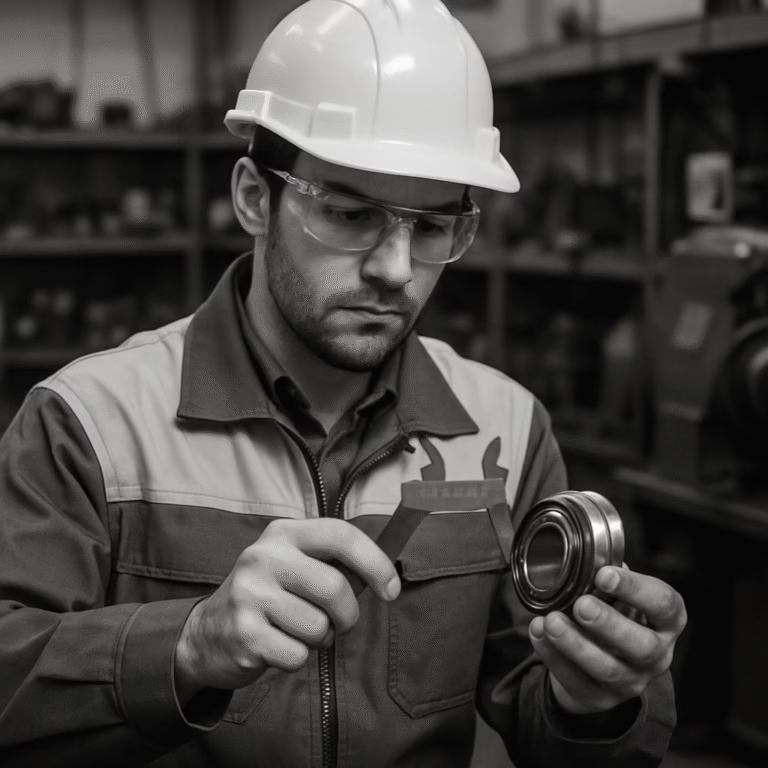
When we talk about high quality, we refer to products that meet or exceed customer expectations in terms of performance, durability, and reliability. High-quality products are free from defects, perform well over time, and provide customers with a satisfying experience. The importance of high quality cannot be overstated, as it directly impacts a company’s success and longevity.
The Business Benefits of High Quality
High-quality products offer numerous benefits to businesses, including increased customer satisfaction, higher sales, and improved brand reputation. When customers are happy with a product, they are more likely to become repeat buyers and recommend the product to others. This word-of-mouth marketing is invaluable for any business.
- Customer Satisfaction: High-quality products meet or exceed customer expectations, leading to greater satisfaction. Satisfied customers are more likely to return and make additional purchases, driving sales and profits.
- Brand Reputation: A reputation for high quality helps a brand stand out in a crowded marketplace. It positions the company as a leader in its industry, attracting more customers and fostering trust.
- Competitive Advantage: Offering high-quality products gives businesses a competitive edge. It differentiates them from competitors who may not prioritize quality, ultimately leading to increased market share.
The Role of Quality Assurance
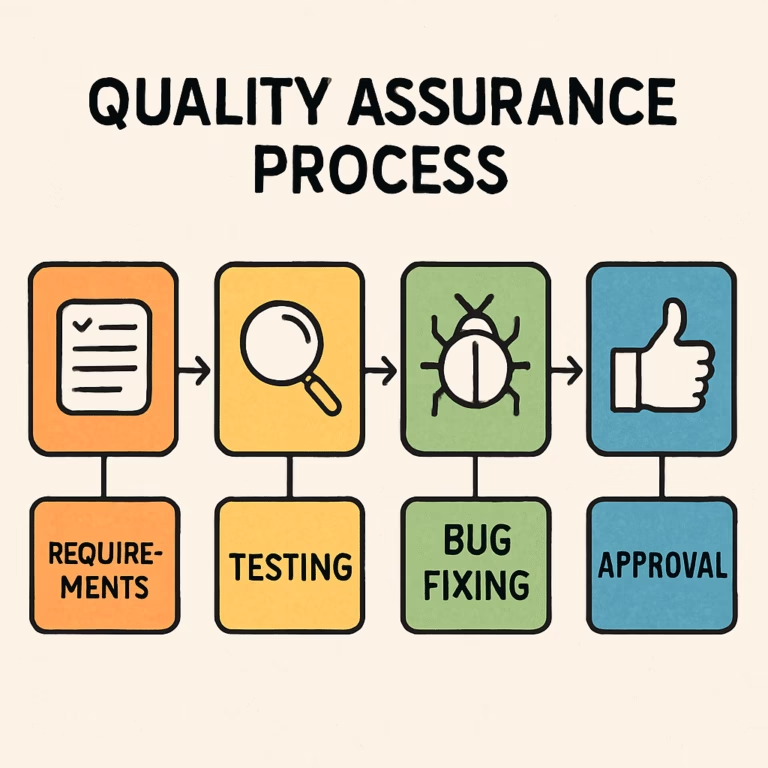
Quality assurance (QA) is an essential process in ensuring high-quality products. QA involves systematic activities and procedures designed to monitor, evaluate, and improve product quality. It covers every stage, from product design to final testing, ensuring that all parts of production meet established quality standards.
Key Components of Quality Assurance
Quality assurance is a comprehensive process that involves several key components:
- Quality Planning: This involves defining quality objectives and determining the necessary resources and processes to achieve them. It sets the foundation for the entire QA process.
- Quality Control: Quality control includes inspecting and testing products to ensure they meet specific standards. It helps identify defects early in the production process, reducing waste and minimizing costs.
- Continuous Improvement: Continuous improvement focuses on making incremental enhancements to products and processes over time. It involves evaluating performance, finding areas for improvement, and implementing changes to boost quality.
- Compliance: Ensuring compliance with industry standards and regulations is essential for maintaining high quality. QA teams must stay up-to-date with current requirements and confirm that products meet all necessary criteria.
Implementing High Quality Practices

by 2H Media
To achieve high quality in products, businesses must implement effective quality management practices. These practices involve setting clear quality objectives, investing in employee training, and utilizing advanced technologies.
Setting Quality Objectives
Establishing clear quality objectives is crucial for guiding the entire QA process. These objectives should align with customer expectations and industry standards, providing a benchmark for measuring success.
- Understand Customer Needs: Businesses must first understand the needs and expectations of their target audience. This knowledge helps shape quality objectives that align with customer preferences.
- Define Quality Standards: Defining quality standards provides a clear framework for evaluating product performance. These standards should be specific, measurable, and achievable, allowing for accurate assessment and continuous improvement.
Employee Training and Development
Investing in employee training and development is vital for maintaining high quality. Well-trained employees are more knowledgeable about quality standards and better equipped to identify and address potential issues.
- Provide Comprehensive Training: Comprehensive training programs should cover all aspects of quality assurance, from production processes to customer service. This helps employees understand their role in maintaining high quality.
- Encourage Skill Development: Encouraging skill development and continuous learning ensures that employees stay current with industry trends and technologies. This strengthens their ability to contribute to ongoing quality improvement efforts.
Leveraging Advanced Technologies
Advanced technologies play a crucial role in enhancing product quality. By leveraging the latest tools and systems, businesses can streamline production processes, improve accuracy, and reduce errors.
- Automation: Automation can significantly improve efficiency and consistency in production. By automating repetitive tasks, businesses can reduce the risk of human error and ensure that products meet established quality standards.
- Data Analytics: Data analytics provides valuable insights into product performance and customer feedback. By analyzing data, businesses can identify trends, predict potential issues, and make informed decisions to enhance quality.
Conclusion
In conclusion, high quality in products is essential for business success. By prioritizing quality assurance, setting clear objectives, investing in employee training, and leveraging advanced technologies, businesses can ensure their products meet the highest standards. This leads to greater customer satisfaction and loyalty, strengthens brand reputation, and provides a competitive advantage in the marketplace. High-quality products form the foundation of a successful and sustainable business, and their importance cannot be overstated.

+49 5651 3312538
info@tmgmbh-online.de
Gebrüderstraße 15 D 37269 Eschwege
Copyright © 2025 All rights reserved
TM GmbH is proudly powered by WordPress